
Hot Water Without Storage Limitations
Tankless Water Heaters in Farmingdale for properties where space constraints or high demand make traditional tanks impractical
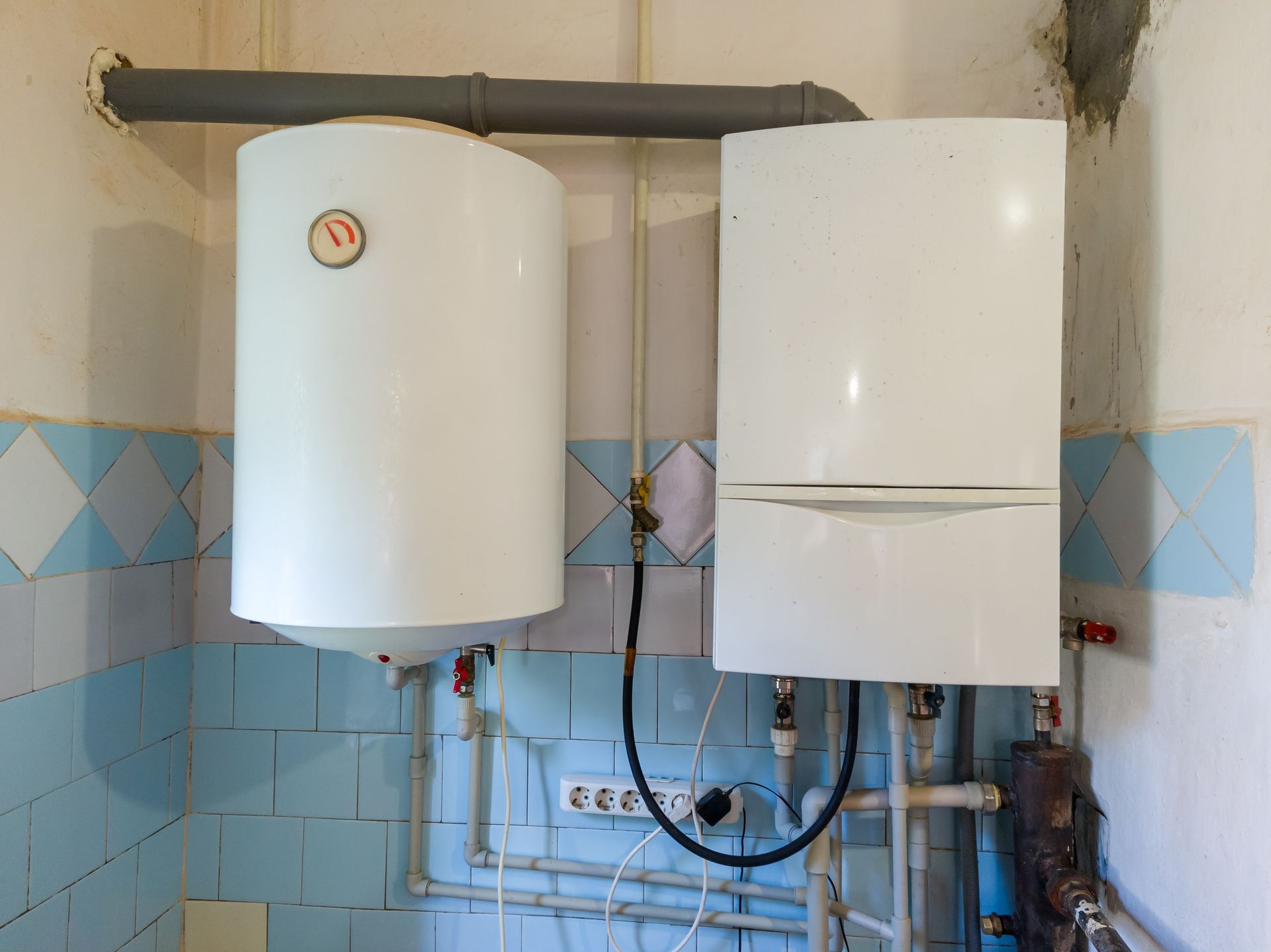
Tankless systems heat water only when fixtures open, eliminating the standby energy loss that occurs when traditional tanks maintain 40 to 80 gallons at temperature around the clock. You need this approach when bathroom additions or household size increases have outpaced your existing tank capacity, when utility costs from constant reheating have become excessive, or when installation space limitations prevent tank placement. Neil Slattery Plumbing Heating and Cooling installs gas-powered tankless units sized to your home's actual hot water demand patterns, which requires calculating simultaneous fixture use and temperature rise needed to reach comfortable shower and appliance temperatures from incoming water temperature.
Installation involves mounting the compact unit on an interior or exterior wall, connecting water supply lines, establishing proper venting for combustion gases, and verifying that gas line capacity can deliver the higher flow rates tankless burners require during operation. Existing gas lines sized for traditional tank water heaters sometimes need upsizing to support the instantaneous demand of tankless combustion.
Arrange an evaluation appointment to determine whether your current gas service and venting pathways support tankless installation without extensive infrastructure modifications.
Why Tankless Systems Function Differently
When you open a hot water fixture, flow sensors detect water movement and ignite the burner, which fires at variable rates depending on how much temperature rise is needed and how many gallons per minute are flowing through the heat exchanger. The system modulates flame intensity to maintain your set temperature regardless of whether one shower runs or three fixtures draw simultaneously, though flow rate decreases as demand increases beyond the unit's maximum capacity.
After installation, you notice that hot water arrives at fixtures after a brief delay while the system detects flow and ignites, but then continues indefinitely without the temperature drop that signals tank depletion in traditional systems. Compact wall-mounting frees up floor space previously occupied by tank equipment, and monthly gas bills typically decrease since the system only fires when you actually use hot water rather than cycling on and off to maintain stored water temperature.
Annual maintenance includes flushing the heat exchanger with descaling solution to remove mineral deposits that accumulate faster in the small passages of tankless systems than in open tank designs. Hard water areas see more aggressive scale formation, which restricts flow and reduces the temperature rise the unit can achieve, making this maintenance particularly important for properties with mineral-heavy well water or municipal supplies with high dissolved solid content.

Tankless Water Heater Questions
Homeowners considering conversion from tank storage to on-demand heating typically want to understand how the different technology affects daily use and long-term costs.
- What determines tankless water heater capacity? Units are rated by maximum flow rate at a specific temperature rise—a system rated for 7 gallons per minute at 70-degree rise can supply two showers simultaneously in winter when incoming water enters at 50 degrees and must reach 120 degrees.
- Why do tankless systems require annual descaling? Scale deposits form on heat exchanger surfaces exposed to rapid temperature changes, and the narrow passages in tankless exchangers restrict more quickly than tank interiors, reducing heating efficiency and eventually triggering flow error codes that shut down operation.
- How does installation differ from tank water heater replacement? Tankless units need larger gas supply lines, specific venting configurations for sealed combustion, and electrical connections for the control systems and ignition, while traditional tanks only require gas or electric hookup and basic draft hood venting for gas models.
- What causes temperature fluctuations in tankless systems? Flow rate changes when fixtures open or close confuse the modulating burner controls momentarily, creating brief hot or cold pulses called "cold water sandwich effect," and low flow rates sometimes fail to trigger ignition, sending cold water through until flow increases.
- Why do some homes need multiple tankless units? Properties with fixtures located far apart or with very high simultaneous demand sometimes install point-of-use tankless heaters at distant bathrooms or a second whole-house unit to handle demand that exceeds a single system's maximum output capacity.
Neil Slattery Plumbing Heating and Cooling evaluates your property's gas infrastructure, venting options, and hot water usage patterns to determine whether tankless installation makes practical and economic sense for your situation. Set up a consultation to review system sizing and installation requirements specific to your home's configuration and utility services.